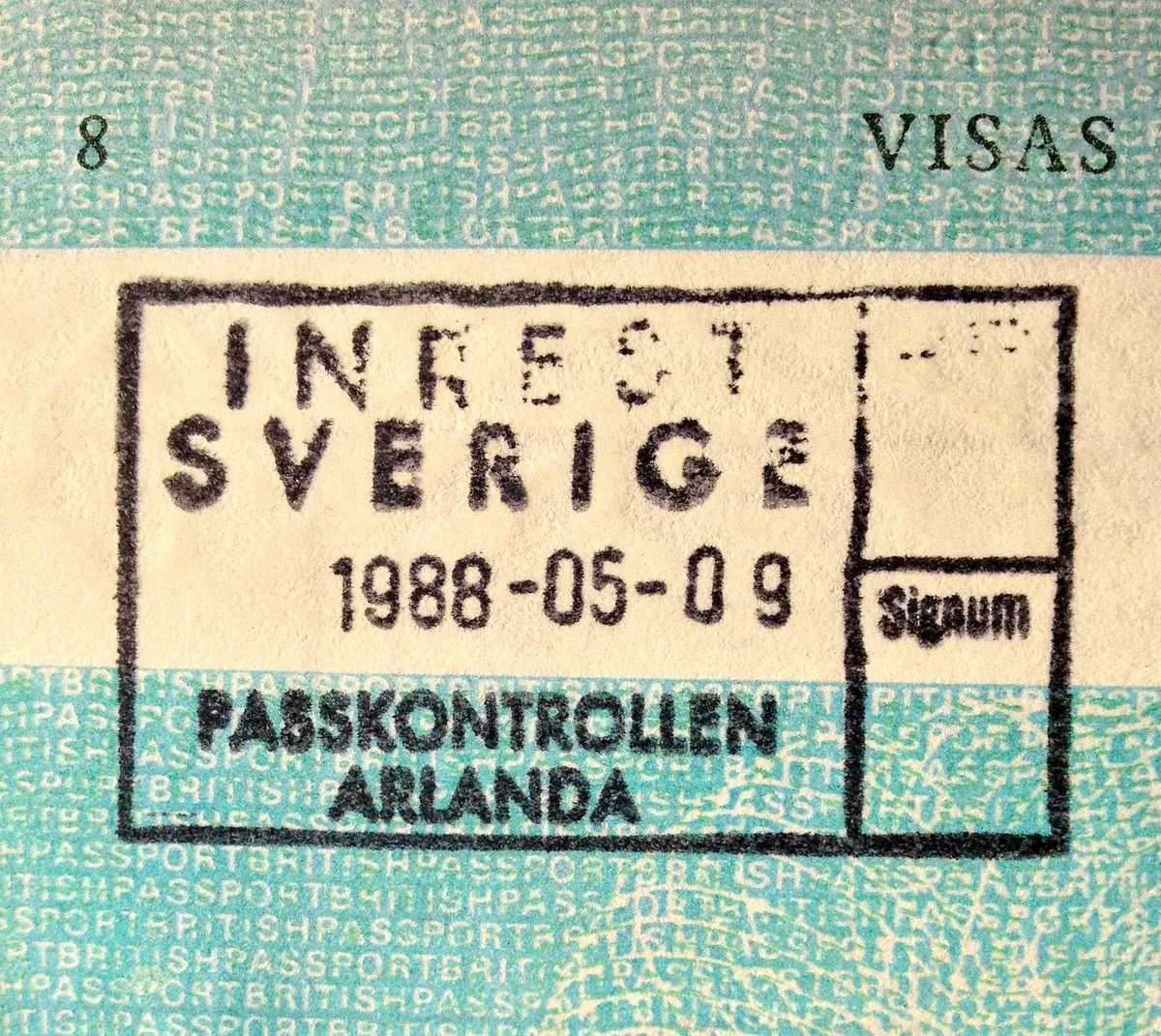
Ninety days sounds generous until you're two months into a slow loop around Spain, Portugal and Italy and it dawns on you that the clock has been running the entire time. Since Brexit, UK passport holders are third-country nationals in the Schengen area, which means the 90/180 rule applies in full. The rule itself is simple. The counting is where people come unstuck, and getting it wrong can follow you around for years.
What the 90/180 rule actually says
As a British passport holder you are a third-country national when you enter the Schengen area, and the standard short-stay limit applies.
You may spend a maximum of 90 days in the Schengen area within any 180-day period.
Not 90 days per country. Not 90 days per trip. Ninety days in total across the whole area, however you split it up.
The 180-day window is rolling. Every time you cross a Schengen border, the question being answered is: over the previous 180 days, has this person been here for more than 90? Days from two, three, five months ago are still sitting in that window, quietly counting against you.
The area takes in most of the EU — including Spain, France, Italy, Greece, Portugal, Germany, Croatia, Bulgaria and Romania — plus Iceland, Norway, Switzerland and Liechtenstein. Ireland and Cyprus are outside it. Country-hopping inside Schengen resets nothing: sixty days in Greece followed by forty in Italy is a hundred days, and the hundredth is an overstay.
How to count your days correctly
Two counting rules catch almost everyone out:
- Your arrival day and your departure day both count as full days. Fly out on Monday and back on Friday and you have used four days, not three.
- Part days count as full days. Land at 11pm and that day still counts against you.
The way to check is to work backwards. Decide the date you want to leave — or arrive — and look at the 180 days before it. Add up every day you spent in the Schengen area during that stretch. If the total is 90 or under, you're fine.
A worked example
Say you spent 40 days in Portugal in March and April, left on 1 May, and now want to return on 1 August for a long autumn. Looking back 180 days from 1 August takes you to early February. Your 40 days sit inside that window, so you have 50 days left, not 90.
That sounds harsh, and it's the bit most people miss. The relief comes later: those spring days drop out of the window 180 days after they happened. Around late September they stop counting, and days free up as you go. Long, slow trips are often possible — they just have to be planned around when the old days expire.
The mistakes that catch British nomads out
- Assuming the clock resets when you leave. A weekend in London changes nothing. Only time out of the area, 180 days after the fact, gives days back.
- Assuming it's per country. It's a single pot for the whole area.
- Forgetting arrival and departure days. They are two of the easiest days to lose and two of the most expensive.
- Assuming a Schengen airport stop doesn't count. If you stay airside and never clear border control, it generally doesn't. If the airport routes you through passport control, or you stay the night, it does.
- Relying on old bilateral agreements. A handful of countries have historic visa-waiver arrangements with the UK, but the European Commission's position is that these don't override the 90/180 rule, and border officers apply the Schengen calculation. Don't build a plan on them.
- Treating 180 days as six months. It's 180 days.
- Losing track mid-trip. By week eight, most people have quietly stopped counting.
What counts, and what doesn't
Counts: every day inside the Schengen area, whether you were sightseeing, visiting family, attending meetings or working remotely. Tourism, business trips and family visits all draw on the same 90 days. Whether remote work is permitted on a tourist entry varies by country and is a grey area — but the days count regardless.
Doesn't count: time in Ireland and Cyprus, and in non-Schengen neighbours such as Turkey, Georgia, Montenegro, Albania, Serbia, Bosnia and Herzegovina, North Macedonia, Kosovo, Morocco and Tunisia. Days outside the area don't eat into your 90, though the 180-day window keeps sliding forwards either way.
Two further exceptions are worth knowing. If you hold a residence permit or long-stay visa from a Schengen country, you are generally outside the short-stay limit while you're resident there. And if you also hold an Irish or other EU passport, use it — EU citizens aren't subject to the 90/180 rule at all.
Planning a year in Europe without breaking the rule
Treat 90 days as roughly a season, and build the rest of the year outside the area.
- Winter in Morocco or Turkey, spring in Spain and Portugal, summer in the UK or Ireland, autumn in the Balkans or Georgia.
- Break up long stays deliberately across borders — three weeks in Croatia, a fortnight in Montenegro — so no single run gets close to the ceiling.
- Use Ireland and Cyprus as genuine reset points. They're outside Schengen, so days there don't count, even though they feel like a European trip.
- If you regularly need more than 90 days, look at national long-stay routes. Several EU countries offer long-stay or digital nomad visas that grant residence and change the maths entirely.
Check the current entry rules for any non-Schengen country before you lean on it as a buffer. Visa-free limits vary and they do change.
When things go wrong
Overstays get recorded. Depending on the country and the length of the overstay, the consequences range from a fine at the border to detention and an entry ban, and an overstay can complicate visa applications for years afterwards.
The EU is also phasing in its Entry/Exit System, which records entries and exits digitally at many borders. Passport stamps are no longer the only record, and a miscalculation is harder to talk your way out of.
If you're anywhere near the limit, leave early. Keep boarding passes, ferry tickets and any evidence of your exits. And if your situation involves a residence permit, a long-stay visa, dual nationality or an unusual travel pattern, take proper immigration advice rather than trusting a forum thread.
A simple system that keeps you legal
- Keep one spreadsheet: entry date, exit date, days used, running total.
- Before booking anything, run the dates through the European Commission's official short-stay calculator. It's free and it does the rolling maths for you.
- Diarise the date when specific days drop out of the window, and plan the next trip around it.
- Set a hard rule for yourself: never book a flight without knowing how many of the last 180 days you've already spent in Schengen.
- When in doubt, book the exit a few days early. Nobody has ever regretted having a spare day in hand.
Ninety days is workable. It rewards a little arithmetic and a plan drawn on a calendar rather than the back of an envelope.
Photo: Pexels / Pixabay