Long-term travel makes the basics feel optional. You sleep when the bus finally arrives, eat whatever is still open at eleven, and promise yourself you'll start running once you're somewhere with pavements. A few weeks of that and the cracks appear: flat energy, a stiff back, a mood that dips for no clear reason.
The answer isn't a punishing routine you'll abandon by Thursday. It's a handful of habits small enough to survive a change of city, a new time zone or a dorm with a squeaky door. None of it is complicated — the trick is doing it repeatedly, in places that keep changing.
Start With Sleep, Then Work Outwards
Sleep is the habit everything else leans on. Get it wrong and no amount of fresh fruit will rescue your energy. The good news is that you need fewer props than you think.
Anchor your wake-up time. Pick an hour and hold it within about sixty minutes, whether it's a Tuesday in Lisbon or a Sunday in Chiang Mai. Your bedtime will drift; a fixed morning pulls it back into line. Then get outside within half an hour of waking — daylight is the strongest signal your body has for resetting its clock, and it works on a cloudy day too.
Build a short wind-down you can repeat anywhere: dim the lights, put the phone on the other side of the room, read something on paper. Crossing time zones? Shift your sleep by an hour or two a day rather than trying to jump the whole gap at once, and keep naps under half an hour so you can still sleep at night.
A sleep kit worth carrying
- Earplugs. Foam ones, bought in bulk. Dorm noise is non-negotiable; your sleep doesn't have to be.
- An eye mask. Thin curtains are standard in far more places than you'd expect.
- A large scarf or sarong. Doubles as a blanket on cold night buses and a pillow on airport floors.
- A charging cable long enough to reach the socket across the room, so your phone isn't charging under your pillow.
If you're considering sleep supplements or medication for jet lag, ask a pharmacist or doctor rather than a stranger in a hostel bar.
Hydration Is the Habit That Breaks First
Nothing collapses faster on the road than your water intake. Air conditioning dries you out, long flights do the same, and hot cities make you sweat without noticing. Bus journeys with no toilet stop make everyone ration their bottle.
Buy a one-litre bottle in your first week somewhere and treat it as part of your bag, not a drink. Fill it whenever you pass a tap or refill station — plenty of cafés and hostels will top it up free. Drink a glass before every coffee. Watch your urine colour as a rough guide: pale straw is fine, dark amber means drink more. Where the local tap water isn't safe for you, stick to sealed or filtered water and be cautious with ice.
Alcohol is the other quiet dehydrator. A beer after landing feels like a reward; a beer plus a 4am wake-up feels like a punishment. Keep the first night dry and you'll sleep better than you have in weeks.
Eat Well When There's No Kitchen
Eating well while travelling isn't about finding the perfect restaurant. It's about putting a few reliable structures around meals so you're not deciding everything from scratch when you're tired and hungry.
Start with one meal you control. Breakfast is easiest: yoghurt, fruit, eggs, oats, whatever's available. If there's a kettle, you have a hot breakfast. If there's a fridge, buy tomorrow's food tonight — coming home hungry to an empty fridge is how takeaway becomes a habit rather than a treat.
At other meals, aim for a shape rather than a rule: some protein, some vegetables, something starchy, and water. That filter works from a Vietnamese noodle stall to a Greek taverna to a roadhouse in the outback.
Small things that add up
- Carry a spork and a small flat container. Leftovers become tomorrow's lunch.
- Keep emergency food in your bag — nuts, dried fruit, a couple of oatcakes. Hunger makes bad decisions for you.
- Shop in local markets late in the afternoon, when prices drop and the produce is still good.
- Cook twice a week if you have a kitchen, even badly. It resets both your budget and your vegetable intake.
If you have a medical condition, an allergy or a restricted diet, get proper advice before you travel, and don't feel over-cautious about carrying safe food with you.
Movement That Doesn't Need a Gym
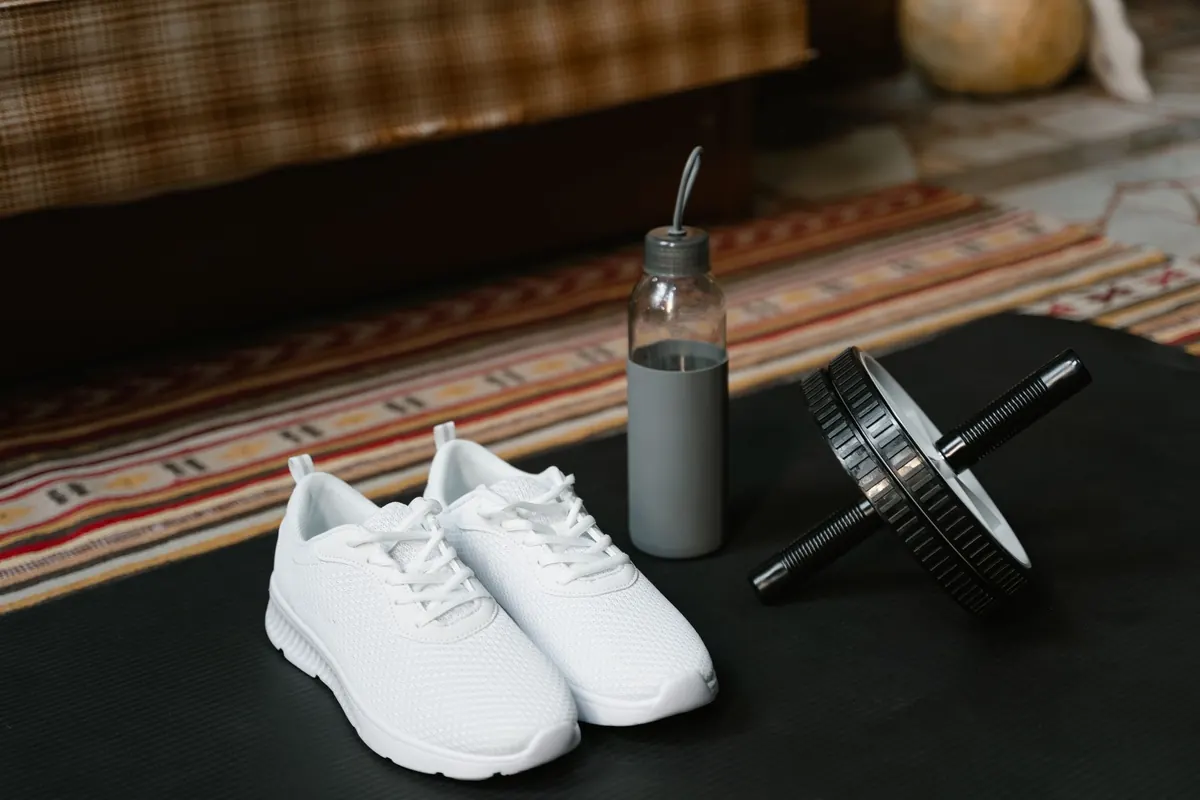
Nobody joins a gym while changing cities every fortnight. What works instead is a short routine you can do in a hostel room, a park or a bus station without looking strange.
- Squats, ten to fifteen. Slow and full range — good after a long train ride.
- Push-ups or wall push-ups, eight to twelve. Scale to your level; nobody is watching.
- Hip flexor and hamstring stretches. Two minutes each side. Rucksacks and seats shorten both.
- A plank or two. Thirty seconds is fine when you're starting.
- Shoulder rolls and neck turns. Especially if you've been carrying a loaded bag all day.
Do that four or five times a week and it costs you fifteen minutes. Walk as your default transport where it's safe: a thirty-minute walk to a viewpoint beats a taxi. A resistance band takes up less space than a pair of socks and gives you options later.
The point isn't athletic fitness. It's keeping your back, hips and mood from stiffening into a permanent state of travel fatigue.
On the Days You Get Run Down
You will get ill. New germs, poor sleep and long journeys make it likely. When it happens, drop the sightseeing, drink more than you want to, eat something plain and sleep. Pushing through a fever costs you a week; resting for a day costs you a day.
Know where the nearest pharmacy is, and keep a small kit: painkillers, rehydration sachets, plasters, and any prescription medication in its original packaging with a copy of the prescription. Check your travel insurance actually covers what you're doing. If symptoms are severe, persistent or you're simply unsure, see a doctor rather than diagnosing yourself from a forum thread.
Keep the Routine Small Enough to Survive
A routine that needs a gym, a blender and eight uninterrupted hours won't last past your second border crossing. A routine of four things might: a fixed wake-up time, a litre of water, one meal you control, fifteen minutes of movement.
Pick one to start with this week. Add another once the first feels automatic, usually a fortnight or so. Reassess on Sundays: what worked, what got skipped, what to drop.
Travel is unpredictable, and that's most of the appeal. Your habits don't have to be as restless as your itinerary. Keep them boring, keep them small, and they'll hold up wherever you land next.
Photo: MART PRODUCTION / Pexels